Pizza Hut Menu Nutrition Facts & Calorie Info
Looking for Pizza Hut Menu Nutrition and fast, reliable calorie data? Pizza Hut nutrition facts give you item-level values for calories, fat, carbs, protein, and serving weight. This helps you plan meals with confidence.
Short answer: the Pizza Hut calorie count and nutrition facts are published by Pizza Hut for the U.S. menu. They list per-slice, per-pizza, and per-serving values for pizzas, wings, pastas, appetizers, sides, desserts, and beverages.
This guide pulls directly from Pizza Hut’s official nutrition guides. It shows the most relevant Pizza Hut menu options for portion control and dietary choices. You’ll find breakdowns by crust style—Pan, Thin ’N Crispy, Hand-Tossed, Stuffed Crust, and Fit ’n Delicious—as well as specialty items like Personal Pan pizzas, P’Zone, Pizza Rollers, and Tuscani pastas.
Expect clear tables with Item, Price, Calories, Vegan/Keto/Gluten-Free options, and Allergens. The article also explains how values vary by serving size and crust. It highlights common high-sodium or high-fat choices and offers smart ordering tips for lower-calorie swaps.
For accuracy, Pizza Hut customer care (1.800.948.8488) and pizzahut.com remain the primary sources. They include Allergy & Sensitivity pages that detail cross-contact risks and gluten-free crust availability at participating locations.
Use this section as your quick reference: Pizza Hut menu nutrition, Pizza Hut nutrition facts, Pizza Hut calorie count, and Pizza Hut menu options are all covered here. This way, you can decide what to order without surprises.
Overview of Pizza Hut Menu Nutrition
Looking for clear, usable Pizza Hut Menu Nutrition to plan a meal with confidence? This guide will help you understand what to expect from Pizza Hut nutritional content. It also shows where to find detailed Pizza Hut food information for each menu item.
What the nutritional guide covers
The guide lists calories, calories from fat, total fat, saturated fat, trans fat, cholesterol, sodium, total carbohydrates, dietary fiber, sugars, protein, and serving weight in grams for each item. Data are shown per-slice, per-item, or per-serving, depending on the product.
Menu categories include pizzas (Pan, Thin ’N Crispy, Hand-Tossed, Stuffed Crust, Fit ’n Delicious), wings (bone-in and boneless), Tuscani pastas, appetizers like breadsticks and cheese sticks, sides, desserts such as HERSHEY’S Chocolate Dunkers and cinnamon sticks, and beverages like Pepsi products and Mountain Dew.
Important disclaimers and variability
Nutrition values follow U.S. labeling conventions and are based on standardized recipes and portion sizes. Ingredient substitutions, seasonal items, and regional availability can change values at the restaurant level.
Cross-contact risk exists because shared equipment and kitchens may introduce allergens. Pizza Hut may offer Udi’s gluten-free crust at some locations, but restaurants are not gluten-free environments; those with celiac disease should treat this as a risk.
For the most current Pizza Hut nutritional content or Pizza Hut food information, call 1.800.948.8488 or consult the brand’s Food Allergy & Sensitivity resources when planning orders.
Calories and Macro Overview for Popular Pizza Types
Knowing the Pizza Hut calorie count and nutrition facts helps you choose the right slice. Here’s a quick guide on how crust, size, and toppings affect calories and macros. Use this info to pick the perfect slice for your hunger, taste, and nutrition needs.
Crust style is key for calorie and carb changes. Thin ‘N Crispy and Fit ‘n Delicious slices have the lowest calories. Pan, Hand-Tossed, and Stuffed Crust add more calories and carbs due to thicker dough and more cheese.
Size also plays a role. Lighter options like a 12″ medium slice have about 65–113 kcal per slice. Standard Pan or Hand-Tossed cheese or meat slices usually have 240–330+ kcal per slice, depending on toppings and size.
Large 14″ pizzas change the math. Thin ‘N Crispy slices are about 88–165 kcal per slice with modest toppings. Pan, Hand-Tossed, and stuffed styles have higher calories, with many toppings pushing per-slice counts above 129–160 kcal and whole-pizza totals much larger.
Protein varies by topping. Meat-topped slices and personal pizzas can have 20–40+ grams of protein per serving. This makes them a good choice when protein is important. Check Pizza Hut nutrition facts for specific protein values for each menu item.
Carbohydrates depend on crust thickness. Thin crust options have lower carbs per slice than Pan or Stuffed Crust. If you’re watching carbs, choose thin-crust or Fit ‘n Delicious options for smaller carb loads.
Fat and saturated fat increase with extra cheese, stuffed crust, and heavy-meat toppings. Options like Meat Lover’s or extra-cheese versions add total fat and saturated fat. So, watch those values if you limit saturated fat intake.
| Item | Typical Price Range | Calories (per slice) | Protein (g) | Carbs (g) | Vegan/Keto/Gluten-Free | Allergens |
|---|---|---|---|---|---|---|
| Thin ‘N Crispy Cheese (large 14″) | $8–$14 | 88–165 | 8–12 | 15–25 | Not keto; no standard vegan | Dairy, wheat |
| Hand-Tossed Pepperoni (12″ slice) | $9–$16 | 240–300+ | 12–20 | 25–35 | Not keto; limited vegan | Dairy, wheat, pork |
| Pan Cheese (12″ slice) | $9–$16 | 260–330+ | 10–18 | 28–38 | Not keto; no standard vegan | Dairy, wheat |
| Fit ‘n Delicious Personal | $5–$10 | 65–113 | 6–14 | 10–20 | Lower-carb choices; not fully keto | Dairy, wheat |
| Stuffed Crust Meat Lover’s (slice) | $12–$20 | 320–450+ | 18–35 | 30–45 | Not keto; no standard vegan | Dairy, wheat, pork |
Use the table to compare calories, protein, carbs, and allergens across common Pizza Hut menu options. Check current Pizza Hut nutrition facts for exact numbers, as toppings, preparation, and regional recipes can vary.
Short tips: choose thin crust to cut calories and carbs, pick lean protein toppings to boost protein per calorie, and avoid extra cheese to lower saturated fat. These small swaps can make a big difference in your Pizza Hut calorie count while keeping flavor.
Pizza Hut Calorie Count for Signature Pizzas
Knowing the Pizza Hut calorie count for signature pizzas is key to making smart choices. The Pizza Hut Menu Nutrition guide shows calorie ranges for slices and whole pies. These values change based on crust, size, and toppings, so it’s important to check both per-slice and per-pizza entries when planning meals.
For a basic idea, consider cheese-only pizzas. A medium (12″) Pan cheese slice usually has 240–270 kcal. Thin ‘N Crispy cheese slices are lighter, with about 190 kcal per slice. Hand-Tossed cheese slices are around 220 kcal. These figures are in the Pizza Hut Menu Nutrition guide and help compare plain crusts to loaded ones.
Examples from the nutritional guide
Signature pizzas with lots of meat are high in calories. Meat Lover’s and Pepperoni Lover’s are often at the top for Pizza Hut signature pizza calories. A medium Meat Lover’s slice can have over 330 kcal. Older guides show large Stuffed Crust Meat Lover’s slices with 400–480+ kcal per slice, due to dense cheese and extra toppings.
Fit ‘n Delicious pizzas aim to be lower in calories. These pizzas have slices around 150–180 kcal, depending on toppings. They are listed in the Pizza Hut Menu Nutrition guide as options for those watching their calories. They help keep daily intake in check while enjoying familiar flavors.
| Item | Size / Serving | Calories | Dietary Options | Allergens |
|---|---|---|---|---|
| Cheese — Pan | Medium slice (12″) | 240–270 kcal | Vegetarian | Dairy, Wheat |
| Cheese — Thin ‘N Crispy | Medium slice (12″) | ~190 kcal | Vegetarian | Wheat, Dairy |
| Cheese — Hand-Tossed | Medium slice (12″) | ~220 kcal | Vegetarian | Dairy, Wheat |
| Meat Lover’s — Medium | Slice (12″) | 330+ kcal | None | Pork, Beef, Dairy, Wheat |
| Stuffed Crust Meat Lover’s — Large | Slice (older guides) | 400–480+ kcal | None | Dairy, Wheat, Pork, Beef |
| Fit ‘n Delicious — Assorted | Slice | 150–180 kcal | Lower-calorie options | Varies by topping |
When using Pizza Hut Menu Nutrition numbers, make sure to check if they are per slice or per whole pizza. Guides may list both, which affects totals and portion planning. For accurate meal tracking, match the listed Pizza Hut calorie count to the serving you will eat.
These examples help compare different crusts and recipes. Use the listed ranges to balance indulgence and daily goals while keeping taste and portion control in view.
Nutrition Facts for Non-Pizza Menu Items
Looking for clear Pizza Hut food information beyond slices? This section breaks down wings, appetizers, sides, desserts, and drinks. You can compare calories, allergens, and diet-friendly choices. Use these facts to balance flavor with nutritional goals when exploring Pizza Hut menu options.
Wings vary widely by style and sauce. Small servings of bone-in wings average about 40–80 kcal per piece. Breaded, fried, or heavily sauced wings push calories and sodium higher. Dips such as ranch or blue cheese add substantial fat; a single 1.5–2 oz ranch cup can add roughly 200–220 kcal.
Fried appetizers and cheesy sides also raise meal totals fast. Fried mozzarella sticks, wedge fries, and cinnamon sticks often range from 150–380+ kcal per serving, depending on portion size and batter. Breadsticks run about 140 kcal each, while cheese breadsticks sit near 170 kcal each in many listings.
Beverage choice has a big impact on overall calories. A 16 oz Pepsi is roughly 200 kcal. Larger fountain drinks, like a 32 oz Mountain Dew, can approach 440 kcal. Swapping to water or diet soda cuts meal calories dramatically and simplifies tracking with Pizza Hut nutrition facts.
Below is a compact breakdown of common non-pizza items. It includes price ranges where typical and flags common allergens and diet notes to help you choose among Pizza Hut menu options.
| Item | Price (typical) | Calories | Vegan/Keto/Gluten-Free | Allergens |
|---|---|---|---|---|
| Bone-In Wings (2 pcs) | $3.49–$4.99 | 80–160 | Not vegan, not keto, not gluten-free | Dairy (if sauced), wheat (breading), soy |
| Boneless Wings (3–4 pcs) | $4.99–$6.99 | 120–320 | Not vegan, not keto, not gluten-free | Wheat, soy, dairy in some sauces |
| Ranch Dip (1.5–2 oz) | $0.50–$1.00 | 200–220 | Not vegan, not keto | Dairy, eggs |
| Breadsticks (each) | $1.25–$2.50 | ≈140 | Not vegan if brushed with butter; not gluten-free | Wheat, dairy (if buttered) |
| Cheese Breadsticks (each) | $1.75–$3.00 | ≈170 | Not vegan, not gluten-free | Dairy, wheat |
| Fried Mozzarella Sticks (serving) | $3.99–$5.99 | 250–380+ | Not vegan, not gluten-free | Dairy, wheat, eggs |
| Wedge Fries (side) | $2.49–$3.99 | 220–340 | Vegan if fried in shared oil; not gluten-free if cross-contact | Possible cross-contact with wheat, dairy |
| Cinnamon Sticks (dessert) | $2.49–$4.29 | 180–300 | Not vegan if buttered; not gluten-free | Wheat, dairy |
| HERSHEY’S Chocolate Dunkers (dessert sauce) | $0.99–$1.99 | ≈90–150 per serving | Not vegan, not keto | Dairy, soy |
| Pepsi (16 oz) | $1.59–$2.49 | ≈200 | Not vegan if sweeteners vary; not keto | None common |
| Mountain Dew (32 oz) | $2.29–$3.49 | ≈440 | Not keto | None common |
Use this guide to compare items side by side. When tracking Pizza Hut nutrition facts, add dips and sauces to your totals. That step prevents surprises and helps match Pizza Hut food information to your daily goals.
Pizza Hut Nutrition Facts for Special Menus and Sizes
Special menu items and sizes at Pizza Hut change the calorie and nutrient picture. Moving from a single personal pizza to a shared pan or a stuffed handheld can make a big difference. This guide helps you compare portion sizes and find reliable nutrition facts.
Personal and small pizzas:
Personal Pan and Personal PANormous pies pack surprising calories in a compact form. A 6″ personal cheese pizza can have near 590 calories, depending on crust and cheese. Remember, a single personal size doesn’t always mean a low-calorie meal.
P’Zone and stuffed handhelds:
P’Zone sandwiches and Pizza Rollers are dense and filling. Half portions of some P’Zone varieties have been reported above 1,000 kcal. So, Pizza Hut P’Zone calories can be higher than expected. If you share or eat half, expect large calorie totals and higher sodium and fat.
Tuscani pastas and half-pan items:
Tuscani entrees like Chicken Alfredo and Meaty Marinara deliver rich flavors with notable nutrition loads. Single servings or half-pan portions commonly fall between about 450 and 580 calories. Use Pizza Hut Tuscani nutrition facts to compare pasta dishes with pizzas and sides.
Family-size and whole-pan math:
Whole-pan and family-size items multiply per-serving values rapidly. A shared pan means each serving can mirror a full individual entrée. Always confirm the stated serving size to calculate true meal totals from published Pizza Hut Menu Nutrition data.
| Item | Typical Serving | Calories (approx.) | Dietary Notes | Common Allergens |
|---|---|---|---|---|
| 6″ Personal Cheese Pizza | Whole personal pie | ~590 kcal | High sodium; not low-fat | Dairy, Wheat |
| P’Zone (half order) | Half stuffed sandwich | 1,000+ kcal | Very calorie-dense; share if watching intake | Dairy, Wheat, Soy |
| Tuscani Chicken Alfredo | Single serving / half-pan | 450–580 kcal | High sodium and fat; hearty portion | Dairy, Wheat |
| Large Pan Pizza (per slice) | One slice of pan pie | ~300–450 kcal | Varies by topping and crust | Wheat, Dairy, Possible Nuts |
Use these comparisons when ordering. Pizza Hut Menu Nutrition details let you weigh personal pizzas, P’Zone choices, and Tuscani pastas against your goals. Small swaps in portion or toppings can cut calories and sodium without losing flavor.
Allergen and Ingredient Considerations
If you follow Pizza Hut Menu Nutrition, it’s key to know about common allergens. Pizza Hut clearly lists milk, wheat, soy, egg, fish, shellfish, and more in their guides. This helps you spot ingredients to avoid before ordering.
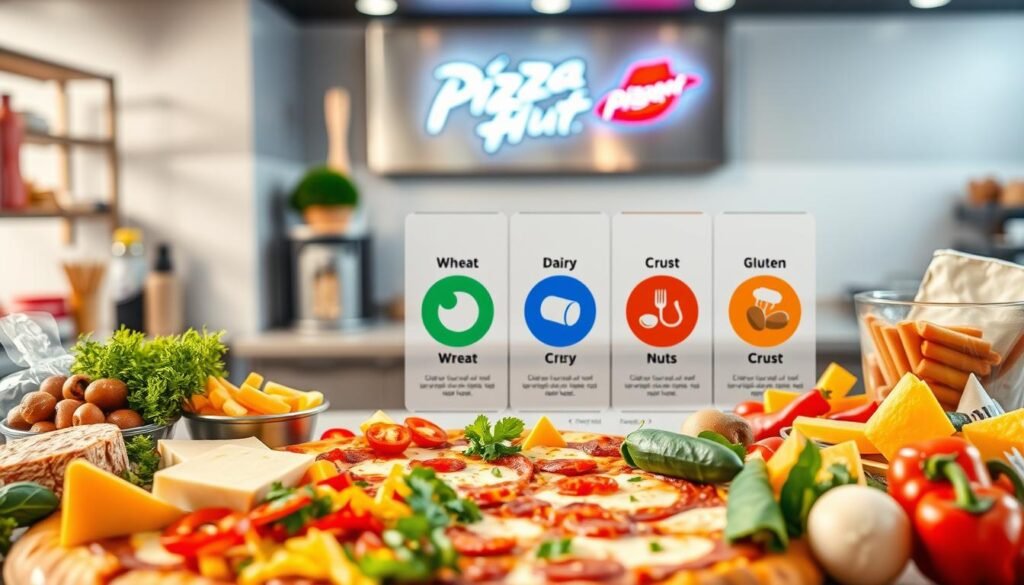
Common allergens and cross-contact risks
Pizza Hut’s nutrition guides tell you which items have specific allergens. They mark milk, wheat, soy, egg, and seafood. Peanuts and tree nuts are not used in most places, but traces might be there.
Shared cooking spaces raise cross-contact risks. Items might be exposed to allergens, even if they’re listed as safe. This is something to think about for serious allergies.
Gluten-free options and limitations
Some Pizza Hut places offer Udi’s gluten-free crust and certain gluten-free ingredients. These are noted in the nutrition guide. The crust is a good option for gluten avoidance.
Pizza Hut is not a gluten-free place. Cross-contact can happen during dough handling and baking. People with Celiac disease should not rely only on labeled gluten-free items.
| Item | Price | Calories | Gluten-Free Option | Allergens |
|---|---|---|---|---|
| Cheese Personal Pizza | $6.99 | 700 | Udi’s crust available | Milk, Wheat (unless GF), Soy |
| Buffalo Wings (6 pcs) | $7.49 | 420 | No | Egg (sauce), Soy |
| Garden Salad | $4.99 | 150 | Yes (no croutons) | None intrinsic; dressings may contain Milk, Egg, Soy |
| Chocolate Chip Cookie | $2.49 | 310 | No | Wheat, Milk, Egg |
For the latest on Pizza Hut allergens, check their Food Allergy & Sensitivity guide. Always talk to a healthcare professional about your specific risks. Use Pizza Hut Menu Nutrition as a planning tool, not a substitute for medical advice.
How to Make Lower-Calorie and Diet-Friendly Choices
Making lower-calorie pizza choices is easy. Start by choosing crusts and toppings that are low in saturated fat and refined carbs. Use the Pizza Hut Menu Nutrition to check your options and find Fit ‘n Delicious items.
Best crust and topping strategies
Opt for Thin ‘N Crispy or Fit ‘n Delicious crusts to cut calories and carbs. These crusts can save hundreds of calories on a medium or large pizza.
Go for veggies like mushrooms, peppers, onions, tomatoes, and spinach for flavor without extra fat. Add grilled chicken for protein, but avoid sausage, meatballs, and extra cheese to keep saturated fat and sodium low.
If unsure, ask for light cheese or cheese on the side. This way, you control how much you eat. Check the Pizza Hut calorie count for specific combos to make informed choices.
Smart ordering tips for portions and sides
Order a personal-size pizza or share a larger one to manage your portion. Splitting a medium pizza with someone else can cut calories and make portion control easier.
Choose salads with vinaigrette on the side and skip fried starters like mozzarella sticks. Opt for water or a small drink instead of a large sugary one to reduce calories and sodium.
Use Pizza Hut Menu Nutrition filters online to find lower-calorie options. Confirm Fit ‘n Delicious availability at your location. Checking the Pizza Hut calorie count and nutrition labels before ordering helps you stay on track.
| Strategy | Example Item | Calories Saved (est.) | Dietary Benefit |
|---|---|---|---|
| Choose thin crust | Thin ‘N Crispy Medium Cheese | ≈200–300 vs. pan | Lower carbs and calories |
| Swap toppings | Veggies + Grilled Chicken | ≈150–250 vs. pepperoni + sausage | More fiber, less saturated fat |
| Portion control | Personal pizza or share a medium | Varies by size; reduces per-serving calories | Better portion management |
| Smart sides | Side salad, water | ≈300+ saved vs. fried appetizer + large soda | Lower sodium and sugar |
Nutrition Benchmarks and Dietary Guidance
This guide helps you match Pizza Hut Menu Nutrition to your daily goals. It compares Pizza Hut health facts to standard recommendations. This way, you can shape meals that fit common diets.
For a typical 2,000-calorie diet, the Dietary Guidelines for Americans suggest limiting saturated fat to about 20 grams. They also recommend keeping sodium intake to 2,300 mg per day. Many Pizza Hut items can reach or exceed these limits in a single serving. Review Pizza Hut health facts for items you plan to order. This way, you can split portions or swap ingredients.
Weight-loss plans benefit from portion control. Choose Fit ‘n Delicious pizzas or smaller sizes. Skip high-calorie sides and creamy dips. Count beverage calories when you total your meal. These steps help tie Pizza Hut Menu Nutrition into a calorie-controlled day.
Heart-healthy choices lower sodium and saturated fat. Pick vegetable toppings, skip extra cheese, and avoid processed meats like pepperoni or sausage. Smaller servings reduce exposure to high sodium levels. Use Pizza Hut nutritional content to compare toppings and crusts before ordering.
Use item-level nutrition data to build meals that meet macro and micronutrient targets. Track per-slice versus per-pizza numbers. Note calories, protein, carbs, fat, sodium, and saturated fat for each selected item. This method makes Pizza Hut Menu Nutrition a practical tool for planning.
| Diet Goal | Practical Tip | How to Use Pizza Hut Data |
|---|---|---|
| Calorie control (2,000 kcal) | Choose small size, limit to 2–3 slices | Check calories per slice in Pizza Hut nutritional content and total before ordering |
| Lower saturated fat | Skip extra cheese and processed meats | Compare saturated fat values from Pizza Hut health facts for toppings and crusts |
| Lower sodium / heart-friendly | Select vegetable toppings and smaller portions | Use sodium values in Pizza Hut Menu Nutrition to pick lower-sodium combinations |
| Protein-focused diets | Pick grilled chicken or add lean protein sides | Sum protein per slice and side using Pizza Hut nutritional content to meet targets |
- Read labels for serving size; many values list per-slice and per-pizza figures.
- Combine nutrition facts from multiple items to track total meal intake.
- When in doubt, choose smaller sizes and more vegetables to reduce calories, sodium, and saturated fat.
How to Read Pizza Hut Nutrition Labels and Use Online Tools
Understanding nutrition data can seem tricky. This guide will help you read Pizza Hut nutrition facts and use the Pizza Hut online nutrition calculator. This way, you can make choices that fit your health goals.
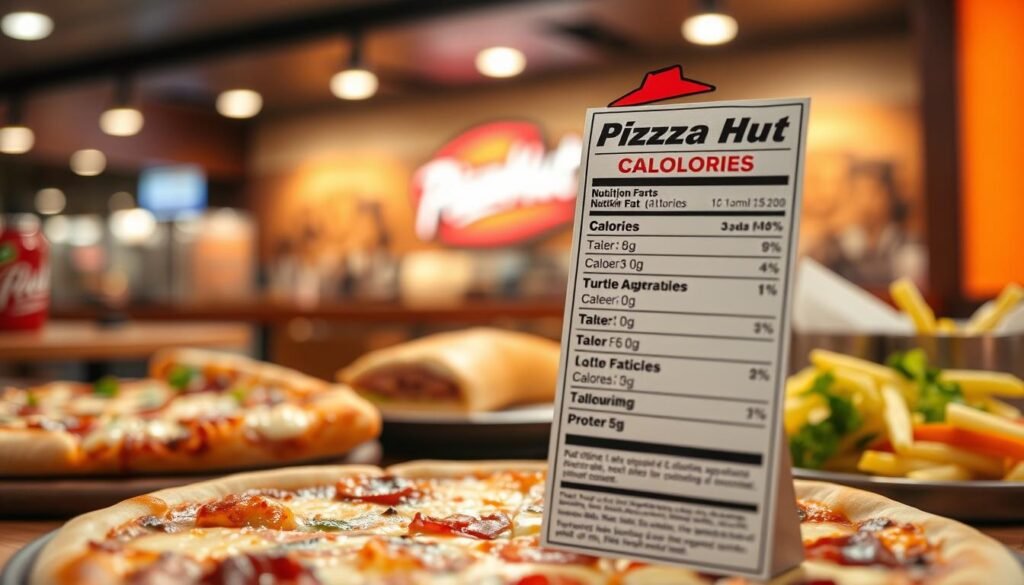
Nutrition tables have standard columns. They list calories, fat, cholesterol, sodium, carbs, fiber, sugars, and protein. Each value is based on a specific serving size.
Understanding table columns and serving sizes
Each column has a specific measurement. Calories show energy, while protein, carbs, and fat show nutrient balance. Sodium and cholesterol relate to heart health, and fiber and sugars affect digestion and blood sugar.
Make sure to check if the values are for one slice or the whole item. The serving weight in grams helps you understand portion sizes. If a label gives calories per slice, multiply by the number of slices for the whole pizza.
Using Pizza Hut’s menu filter and up-to-date online data
Use the Pizza Hut Menu Nutrition filter on their website to sort by calories or ingredients. This filter shows active, seasonal, or discontinued items. Always check if an item is available before using the nutrition data.
Menu recipes and portion sizes change over time. Look at historical data from 2011, 2015, and 2023 to see these changes. For the most current nutrition values, use the Pizza Hut online nutrition calculator when planning meals.
| Column | What it shows | Why it matters |
|---|---|---|
| Calories | Total energy per serving | Use to manage daily intake |
| Total Fat / Sat Fat / Trans Fat | Fat breakdown in grams | Helps assess heart-health risk |
| Cholesterol | Milligrams per serving | Important for cardiovascular guidance |
| Sodium | Milligrams per serving | Track for blood pressure and salt limits |
| Carbohydrates / Fiber / Sugars | Net carbs and fiber content | Useful for weight, diabetes, and gut health |
| Protein | Grams per serving | Supports satiety and muscle goals |
| Serving weight (g) | Portion size in grams | Compare items and scale portions |
- Start by checking whether values are per slice or per whole item.
- Use the Pizza Hut Menu Nutrition filter to find lower-calorie options.
- Run items through the Pizza Hut online nutrition calculator for custom combinations and topping swaps.
- Confirm item availability; seasonal changes can alter nutrition data.
Follow these steps to read labels with confidence. Accurate reading of Pizza Hut nutrition facts helps you plan meals, manage portions, and use the Pizza Hut Menu Nutrition tools effectively.
Common High-Risk Items for Calories, Fat, and Sodium
When you look at Pizza Hut’s menu, some items stand out. They are high in calories, saturated fat, and sodium. Knowing these helps you plan a meal without surprises.
Stuffed crust and large specialty pies are often high-risk. Meat-forward pizzas, extra cheese, and bigger sizes add a lot of calories per slice. Fried appetizers and rich desserts also increase energy and sodium, making a meal heavy.
Menu items to watch
- Large Stuffed Crust Meat Lover’s — slices can reach roughly 400–480+ kcal each, with high saturated fat and sodium.
- Pepperoni Lover’s and other meat-heavy specialty pizzas — dense toppings raise both fat and calorie counts.
- Fried Cheese Sticks and similar appetizers — single servings often carry 300–400+ kcal and extra sodium.
- 32 oz and larger sugary beverages — near 400 kcal from sugar alone for some fountain sizes.
- HERSHEY’S Chocolate Dunkers and cinnamon desserts — concentrated sugars and calories that finish a meal with a big jump.
Examples from Pizza Hut nutrition data
| Item | Typical Calories | Major Nutrition Concerns | Diet Notes |
|---|---|---|---|
| Large Stuffed Crust Meat Lover’s (per slice) | 400–480+ | Saturated fat, sodium | High-calorie; not ideal for low-sodium plans |
| Large Pepperoni Lover’s (per slice) | 350–420 | Sodium, processed meats | Raises daily sodium quickly |
| Fried Cheese Sticks (serving) | ~380+ | Fried fat, sodium | Consider sharing or skipping |
| 32 oz Soda (large) | ~400 | Added sugars, empty calories | Swap for water or unsweetened tea |
| HERSHEY’S Chocolate Dunkers (order) | ~300–500 | Sugar, refined carbs | Factor into overall meal total |
Use Pizza Hut nutrition facts to plan before ordering. A big pizza with fried sides and a large soda can quickly go over daily limits. Small changes can make a big difference.
Pizza Hut Menu Nutrition
Looking for clear Pizza Hut Menu Nutrition for your next order? This section explains why people search for precise calorie counts and allergen notes. You’ll find tips on presenting detailed nutrition data and making informed choices.
Many people want straightforward Pizza Hut food information to compare different options. Accurate health facts help balance taste and nutrition. Presenting per-item calories and allergens boosts trust and makes decisions easier.
Why this keyword matters to readers and searchers
Search intent for Pizza Hut Menu Nutrition is about quick access to calorie counts and ingredient lists. Readers often need to match menu choices to diets like keto or vegetarian. Clear listings reduce uncertainty and speed up ordering.
Publishers who share updated Pizza Hut food information earn credibility. Citing current nutrition values and noting variation by store or preparation helps users trust the guidance. Simple language keeps the content approachable for a broad audience.
How to present detailed nutrition tables in your article
Use a compact table with consistent columns for quick scanning. Include Item, Price, Calories, Vegan/Keto/Gluten-Free options, and Allergens. Limit rows to active menu items and refresh numbers from Pizza Hut’s nutrition resources regularly.
Below is a sample table with representative items across pizzas, wings, and sides. Values are examples for layout and must be updated before publication.
| Item | Price | Calories | Vegan/Keto/Gluten-Free Options | Allergens (Nuts, Dairy, etc.) |
|---|---|---|---|---|
| Medium Hand-Tossed Cheese Pizza | $11.99 | 880 | Not Vegan / Not Keto / No Gluten-Free Crust | Dairy, Wheat |
| Large Pan Pepperoni | $15.49 | 1170 | Not Vegan / Not Keto / No Gluten-Free Crust | Dairy, Wheat |
| Thin Crust Veggie, Medium | $12.99 | 720 | Vegetarian / Not Keto / No Gluten-Free Crust | Dairy, Wheat |
| Fit ‘N Delicious Thin Crust, Personal | $6.99 | 420 | Not Vegan / Lower Carb option / No Gluten-Free Crust | Dairy, Wheat |
| Bone-In Wings (8 pc), Original | $9.49 | 560 | Not Vegan / Keto-friendly if unbreaded / Not Gluten-Free | Soy, Dairy (in sauces) |
| Boneless Wings (8 pc), Buffalo | $8.99 | 640 | Not Vegan / Not Keto / Not Gluten-Free | Wheat, Dairy |
| Breadsticks (Regular) | $4.99 | 360 | Not Vegan / Not Keto / Not Gluten-Free | Wheat, Dairy |
| Cheesy Garlic Bread | $5.49 | 470 | Not Vegan / Not Keto / Not Gluten-Free | Dairy, Wheat |
| Marinara Sauce (Side) | $0.99 | 35 | Vegan / Not Keto / Gluten-Free | None |
| Chocolate Chip Cookie (12-inch) | $7.99 | 940 | Not Vegan / Not Keto / Not Gluten-Free | Wheat, Eggs, Dairy |
| Tuscani Alfredo, Small | $7.99 | 580 | Not Vegan / Not Keto / Not Gluten-Free | Dairy, Wheat |
| Meat Lover’s Personal P’Zone | $8.49 | 760 | Not Vegan / Not Keto / Not Gluten-Free | Dairy, Wheat |
| Garden Salad (No Dressing) | $3.49 | 90 | Vegan if no cheese / Keto-friendly / Not Gluten-Free if croutons | Dairy (if cheese), Wheat (croutons) |
| Soft Drink (Medium) | $1.99 | 210 | Vegan / Not Keto / Gluten-Free | None |
| Stuffed Garlic Knots (6 pc) | $5.99 | 520 | Not Vegan / Not Keto / Not Gluten-Free | Wheat, Dairy |
Use this layout when publishing. Keep rows between 15 and 30 for thorough coverage. Note allergen flags and diet labels in plain terms.
- Refresh numbers from Pizza Hut prior to posting.
- Call out variable items like specialty crusts and limited-time toppings.
- Offer portion tips so readers can split high-calorie items and cut sodium.
Clear presentation of Pizza Hut menu options paired with up-to-date Pizza Hut food information helps readers assess Pizza Hut health facts quickly. A tidy table with short notes improves trust and usability for people planning meals, tracking calories, or managing allergies.
Conclusion
This guide makes it easy to understand Pizza Hut Menu Nutrition. You can plan meals with confidence. The calories and nutrients change based on the crust, size, and toppings.
Choosing Thin ’N Crispy or Fit ’n Delicious crusts and lighter toppings helps. This way, you can enjoy less calories and carbs while keeping the flavor. Remember, adding sides, dips, or extra cheese can greatly increase the calorie count. So, always check the total before you order.
Controlling portion sizes and sides is key. Sauces, dips, and appetizers can add a lot of saturated fat and sodium. This can easily exceed daily limits. Use the menu tables to compare items and make smart choices.
For the most accurate planning, check Pizza Hut’s official nutrition and allergy resources. You can also call 1.800.948.8488 for the latest information. Use the article’s recommended table layout to create full nutrition charts on your site.
Now, you have a clear guide to Pizza Hut Menu Nutrition. Use the tables and tips to plan smarter orders. You can enjoy your favorite foods without sacrificing nutrition.